How to Achieve Peace

This post is my Sunday sermon for April 12, 2026
Scripture Texts: John 20:19-23, 30-31; Revelation 1:4-8
If I was to make a “V” sign with my 1st and 2nd fingers, what might that gesture or sign mean to you?
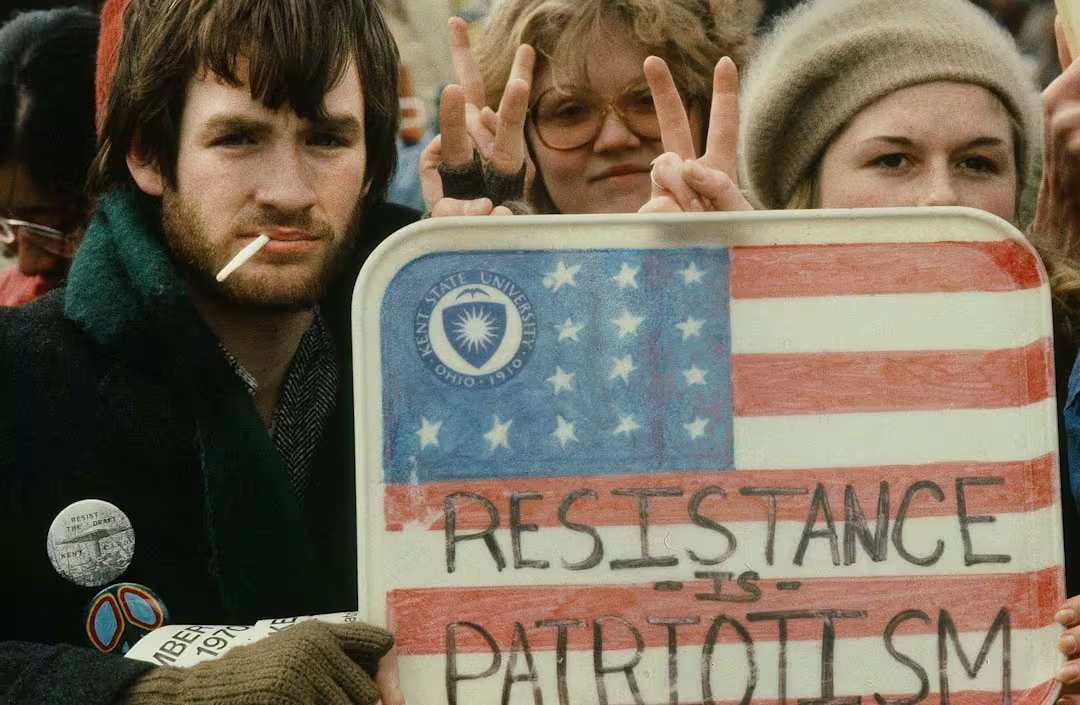
When I was a kid in the early 70’s, I saw teenagers frequently making this gesture to signify peace. It even became a greeting of sorts: “Hey man: peace. Can ya dig it?” They wore it on their clothing and incorporated it into their graffiti. For teenagers who were seeing the horrors of the Vietnam War on the nightly news in their living rooms, it became a protest gesture, a gesture of resistance.
But they did not, of course, invent the gesture. It was actually developed by a Belgian Olympian and politician, turned radio-broadcaster, named Victor de Laveleye. Escaping Belgium in 1940, he became the director of the Belgian division of the BBC in London and desired to develop a common gesture with which the Belgian people could oppose the Nazis. It was noticed by a fellow BBC radio personality who encouraged its use throughout the Allied European Countries. Subsequently endorsed by Churchill, it made its way across the pond following the bombing of Pearl Harbor. In the hands of politicians, the V-sign became the much-anticipated and subsequently celebrated sign for Victory over the original Axis of evil.
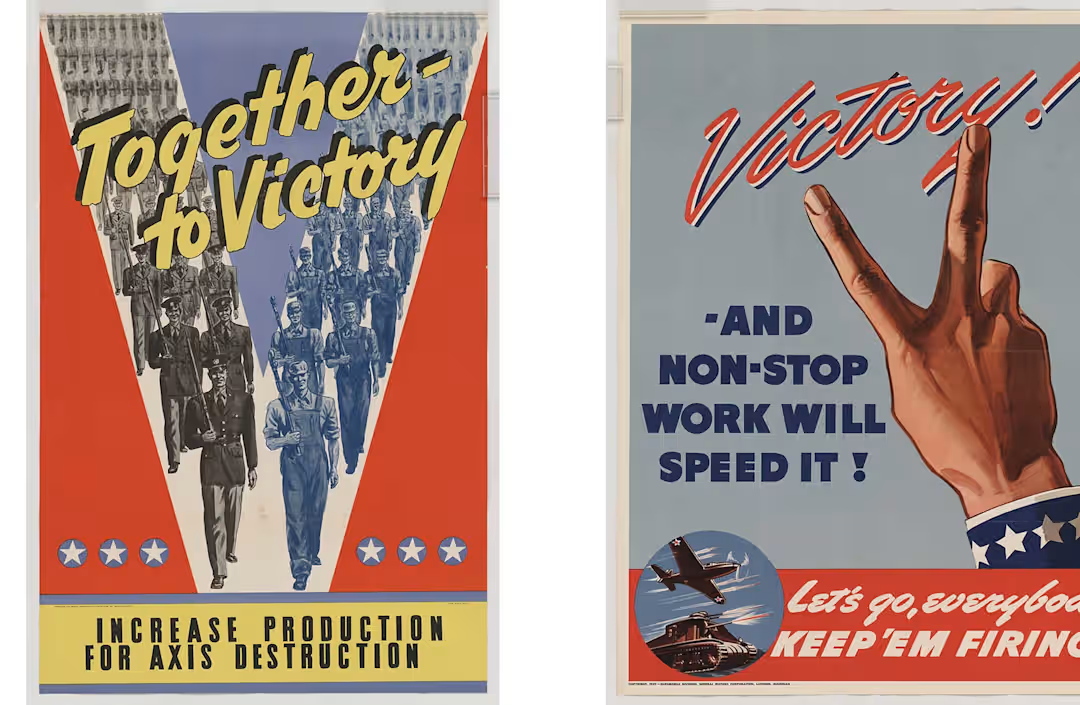
So why this 20th century history lesson? Because it bears a striking resemblance to the 1st century Roman Empire. An historian named Andrew Hammond had this to say about Churchill’s use of the V for Victory sign: “People associate… Eisenhower and Churchill with waging war, but from another perspective, they’re waging war to get to peace.” They’re waging war to get peace. Since Nixon loved the victory sign so much, the teens and young adults during his presidency claimed the gesture as their own and redefined it into a peace sign. They believed victory wasn’t won by winning war, but by ending it.[i] [Quote and graphics come from this online article, see endnote below.]
But this post comes with two caveats:
First, I do not wish in any way to criticize or disparage American soldiers or veterans. Those who serve in the military do so, I believe, because they are committed to protecting the safety of the rest of us, although over the course of history (we must all admit) war is often begun by powerful “politicians who hide themselves away” and “treat ordinary people like pawns in chess,” as the rock band Black Sabbath sang.[ii]
Furthermore, soldiers and veterans pay dearly for their faithful duty and service, many bearing life-long physical wounds and emotional scars we’ve now defined as PTSD. If you’d like to know more, check out the site on the screen and its staggering, heart-breaking statistics.[iii]
Now, my second caveat: Jesus was executed by the Romans because he was judged to be a threat to the empire. Crucifixion was used, primarily, for those judged to pose a threat to the state. Jesus was political. But, let me be clear: Jesus wasn’t a politician. He wasn’t incarnated in order to run for political office. However, he entered into a sinful broken world where those yielding power often did so for selfish purposes. Does that sound familiar? So, if Jesus was to combat the powers of evil, challenging the political power-brokers was inevitable. And if we, his followers, are to confront the powers of evil, we, too, must be politically engaged. To return to last week’s sermon and service, remember that all of us who join the church make a promise to: “…reject the evil powers of this world… and accept the freedom and power God gives to resist evil, injustice, and oppression in whatever forms they present themselves.”[iv] That was the promise we made to Christ and his Church.
So, again, why did this 20th century history lesson? And how does it bear a resemblance to the 1st century Roman Empire? Well, because from approximately 27 BC to 180 AD the Roman Empire touted something they called Pax Romana, the Peace of Rome. But was it really peace? It was, in their minds (like the leaders of the Allied forces), all about waging war to get peace. And, good luck with that.
In both of the scriptures, the larger context is anything but peaceful. In John’s gospel, it is the evening of the first Easter. Earlier that morning, Peter and another of Jesus’ disciples had witnessed his empty tomb. Mary had been the first to arrive at Jesus’ tomb and she had seen the risen Lord. Jesus commissions her to bring the good news of his resurrection to his disciples, his brothers, and she does. But the miraculous news of Jesus’ rising and their own first-hand knowledge of his empty tomb appear, at least initially, to have little effect on these men because, the evangelist tells us, on the evening of our Lord’s resurrection his chosen disciples are holed up behind locked doors, apparently paralyzed with fear.
Likewise, John, the author of Revelation, proclaims his message to people who find themselves oppressed and threatened by the Roman Empire. John himself has been sentenced by the Romans to exile on the island of Patmos. Again, historians write of Pax Romana, the so-called “peace of Rome” that began under Emperor Augustus. But, truth be told, the Romans by that time had basically conquered as much of the known world as they could handle. It’s hard to be at war when you’ve wiped out nearly all the opposition. For the Romans, peace meant their opponents had been beaten down beyond the ability to resist. Pax Romana had come at the tip of a sword and, whenever necessary, it was maintained by the sword. Once in seminary I remember reading of a remote village within the Roman Empire whose entire storehouse of crops for the winter were pillaged by Roman troops. That harsh winter many villagers died and those who lived barely survived on things like dried grass and leaves. That hardly sounds like peace to me.
When Jesus greets his disciples that first Easter evening, he greets them with these words: “Peace be with you.” He speaks over them the peace he has promised. He breathes upon them and they receive the gift of the Holy Spirit, his ongoing presence and the purveyor of peace. This encounter is the fulfillment of what Jesus had promised them. Jesus always keeps his promises.
On the night before he was crucified, while he met with his disciples, Jesus spoke these words to them:
“The Advocate, the Holy Spirit, whom the Father will send in my name, will teach you everything and remind you of all I have said to you. Peace I leave with you; my peace I give to you. I do not give to you as the world gives. Do not let your hearts be troubled, and do not let them be afraid.”[v]
Jesus assures the disciples that, because of their relationship with him, they will have peace. When he is no longer able to be with them in the flesh, his relationship with them will continue through the Holy Spirit, Jesus’ very real and effective on-going presence. And that Spirit will bring them a very distinctive peace.
Notice that in this morning’s reading from John, Jesus repeats his greeting to the disciples.
Twice Jesus says, “Peace be with you.”
And between that first and second time, he shows them his wounded hands and side.
I believe firmly that the concluding words of this paragraph are connected with Jesus’ revealing of his wounds. In v. 23, Jesus says,
“If you forgive the sins of any, they are forgiven them; if you retain the sins of any, they are retained.”
Friends, Jesus, our Savior and Lord, did not lash out with violence and vengeance toward those who did him harm… or even those who betrayed or denied him. In fact, chapter 21 of John’s gospel (while considered by many scholars to be a later edition) concludes with the story some refer to as “the reinstatement of Peter.” If you don’t know the story, the resurrected Jesus appears to his disciples for the final time early in the morning after they’ve been out fishing all night. They hadn’t caught a thing. They initially don’t recognize Jesus, who hollers from shore asking if they’ve caught anything. When they respond with the negative, he instructs them to toss their net on the other side of the boat and, when they do and suddenly fill up the net with fish, the disciples recognize this shoreline gawker as Jesus.
They come ashore and enjoy a breakfast of fish and bread and, after breakfast, Jesus invites Peter to go on a walk. As they walk, three times Jesus asks Peter if he loves him. Many spiritual writers across the centuries have interpreted this threefold pattern as a “reversal,” so to speak of Peter’s three denials of Jesus in the high priest’s courtyard on the night of his arrest. Jesus never addresses Peter’s cowardice and rejection. Rather, as they walk along the beach that morning, Jesus asks Peter three times if Peter loves him. Each time Peter responds affirmatively, Jesus, the Good Shepherd, instructs Peter to continue his ministry of caring for his sheep. In the ancient world, love was expressed through loyalty. Peter in the courtyard that night was quick to distance himself from Jesus three times. So, on the shoreline, Jesus gives Peter three opportunities to profess his love, that is, his loyalty, to Jesus. And, (who knows?) perhaps as a sign of his forgiveness, each time Jesus entrusts his ongoing ministry to Peter. Jesus restores their relationship and that is what peace looks like. Peace is about restoration of relationship between humanity and God, among humanity, and – I add in light of more scorched and polluted Middle Eastern land than any of us might care to measure or think about – our relationship with creation… a covenant our Artemis astronauts emphasized on their mission. Peace is obtained and maintained through our fellowship, our close trusting relationship, with Christ. And that peace not only brings right-ness to our relationship with God, it brings right-ness to our relationships with others and the world.
I dare say, the only time war and peace belong together is on the cover of Tolstoy’s novel because we cannot make peace by waging war. We can only make peace through forgiveness and reconciliation. That is what Jesus, our teacher, our Savior, and our Lord taught us.
In her book Inner Compass, Christian author Beverly Silf writes that “[our] choices turn into habits, and habits [develop] character. And this process goes further than the boundaries of [ourselves]. My choices… make subtle but certain changes to the “how” of the whole human family. My choices for truth make the world more truthful. My betrayals of my own integrity undermine the integrity of all.”[vi] I would add that our choices for revenge, power, and aggression make the world a more vengeful and aggressive place while our choices for gentleness, forgiveness and peace make the world a more gentle and peaceful planet.
My readers: The cost of remaining apolitical is a price too high. We cannot afford to bury our heads in the sand while our world goes to hell in a hand basket. We must actively and boldly resist evil, injustice, and oppression in whatever forms they present themselves. Our very lives become an oxymoron when we proclaim to follow the Prince of Peace, yet clamor for war. Let us choose to live filled with the Spirit of our risen Lord. Let us choose peace. Amen.
[i] https://www.history.com/articles/v-sign-victory-peace-symbol
[ii] https://genius.com/Black-sabbath-war-pigs-lyrics
[iii] https://nchv.org/veteran-homelessness/
[iv] The United Methodist Hymnal; The United Methodist Publishing House, 1989, p. 40.
[v] John 14:26-27.
[vi] Margaret Silf. Inner Compass: An Invitation to Ignatian Spirituality (Kindle Locations 311-313). Kindle Edition.
 traceyleslie