christianity
How to Achieve Peace

This post is my Sunday sermon for April 12, 2026
Scripture Texts: John 20:19-23, 30-31; Revelation 1:4-8
If I was to make a “V” sign with my 1st and 2nd fingers, what might that gesture or sign mean to you?
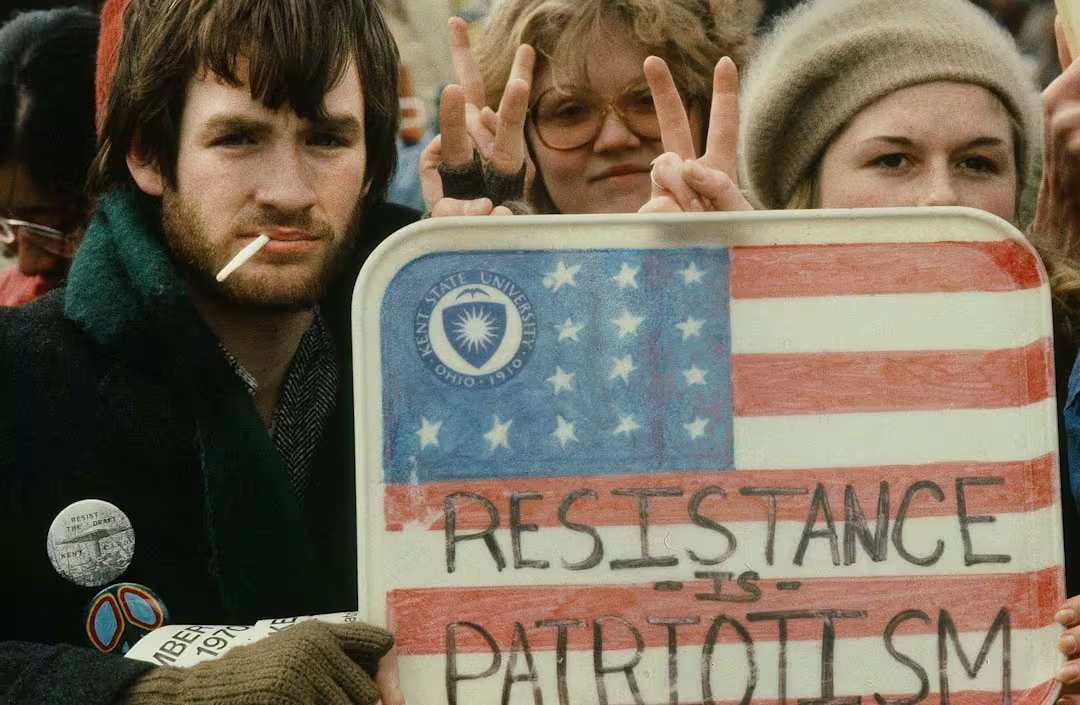
When I was a kid in the early 70’s, I saw teenagers frequently making this gesture to signify peace. It even became a greeting of sorts: “Hey man: peace. Can ya dig it?” They wore it on their clothing and incorporated it into their graffiti. For teenagers who were seeing the horrors of the Vietnam War on the nightly news in their living rooms, it became a protest gesture, a gesture of resistance.
But they did not, of course, invent the gesture. It was actually developed by a Belgian Olympian and politician, turned radio-broadcaster, named Victor de Laveleye. Escaping Belgium in 1940, he became the director of the Belgian division of the BBC in London and desired to develop a common gesture with which the Belgian people could oppose the Nazis. It was noticed by a fellow BBC radio personality who encouraged its use throughout the Allied European Countries. Subsequently endorsed by Churchill, it made its way across the pond following the bombing of Pearl Harbor. In the hands of politicians, the V-sign became the much-anticipated and subsequently celebrated sign for Victory over the original Axis of evil.
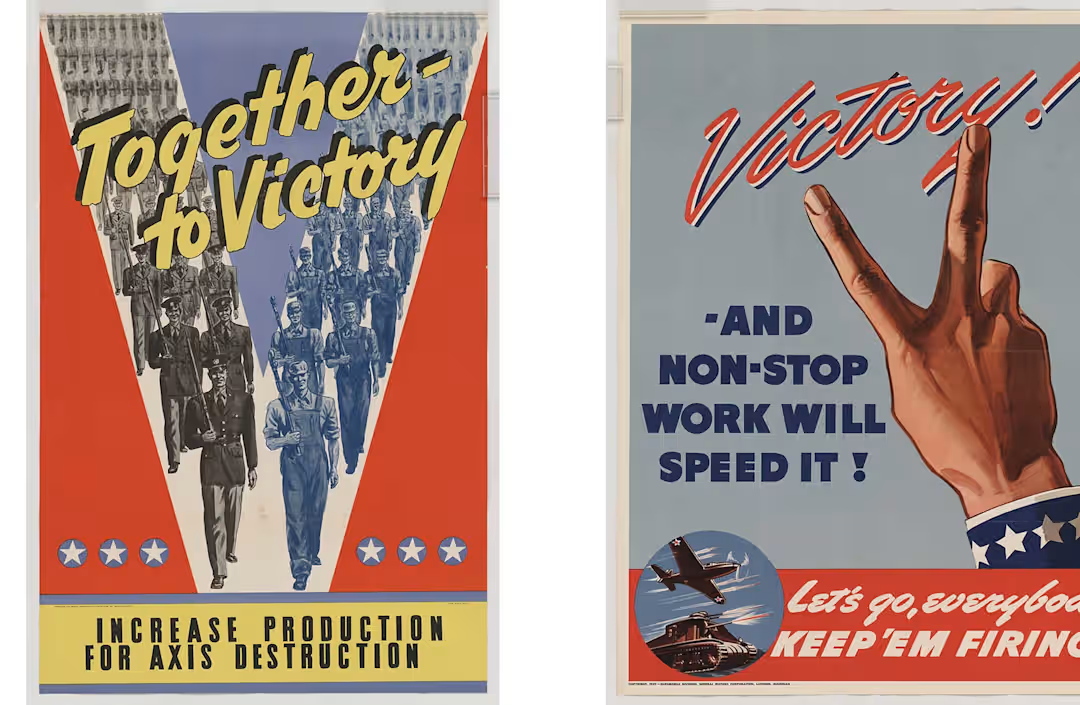
So why this 20th century history lesson? Because it bears a striking resemblance to the 1st century Roman Empire. An historian named Andrew Hammond had this to say about Churchill’s use of the V for Victory sign: “People associate… Eisenhower and Churchill with waging war, but from another perspective, they’re waging war to get to peace.” They’re waging war to get peace. Since Nixon loved the victory sign so much, the teens and young adults during his presidency claimed the gesture as their own and redefined it into a peace sign. They believed victory wasn’t won by winning war, but by ending it.[i] [Quote and graphics come from this online article, see endnote below.]
But this post comes with two caveats:
First, I do not wish in any way to criticize or disparage American soldiers or veterans. Those who serve in the military do so, I believe, because they are committed to protecting the safety of the rest of us, although over the course of history (we must all admit) war is often begun by powerful “politicians who hide themselves away” and “treat ordinary people like pawns in chess,” as the rock band Black Sabbath sang.[ii]
Furthermore, soldiers and veterans pay dearly for their faithful duty and service, many bearing life-long physical wounds and emotional scars we’ve now defined as PTSD. If you’d like to know more, check out the site on the screen and its staggering, heart-breaking statistics.[iii]
Now, my second caveat: Jesus was executed by the Romans because he was judged to be a threat to the empire. Crucifixion was used, primarily, for those judged to pose a threat to the state. Jesus was political. But, let me be clear: Jesus wasn’t a politician. He wasn’t incarnated in order to run for political office. However, he entered into a sinful broken world where those yielding power often did so for selfish purposes. Does that sound familiar? So, if Jesus was to combat the powers of evil, challenging the political power-brokers was inevitable. And if we, his followers, are to confront the powers of evil, we, too, must be politically engaged. To return to last week’s sermon and service, remember that all of us who join the church make a promise to: “…reject the evil powers of this world… and accept the freedom and power God gives to resist evil, injustice, and oppression in whatever forms they present themselves.”[iv] That was the promise we made to Christ and his Church.
So, again, why did this 20th century history lesson? And how does it bear a resemblance to the 1st century Roman Empire? Well, because from approximately 27 BC to 180 AD the Roman Empire touted something they called Pax Romana, the Peace of Rome. But was it really peace? It was, in their minds (like the leaders of the Allied forces), all about waging war to get peace. And, good luck with that.
In both of the scriptures, the larger context is anything but peaceful. In John’s gospel, it is the evening of the first Easter. Earlier that morning, Peter and another of Jesus’ disciples had witnessed his empty tomb. Mary had been the first to arrive at Jesus’ tomb and she had seen the risen Lord. Jesus commissions her to bring the good news of his resurrection to his disciples, his brothers, and she does. But the miraculous news of Jesus’ rising and their own first-hand knowledge of his empty tomb appear, at least initially, to have little effect on these men because, the evangelist tells us, on the evening of our Lord’s resurrection his chosen disciples are holed up behind locked doors, apparently paralyzed with fear.
Likewise, John, the author of Revelation, proclaims his message to people who find themselves oppressed and threatened by the Roman Empire. John himself has been sentenced by the Romans to exile on the island of Patmos. Again, historians write of Pax Romana, the so-called “peace of Rome” that began under Emperor Augustus. But, truth be told, the Romans by that time had basically conquered as much of the known world as they could handle. It’s hard to be at war when you’ve wiped out nearly all the opposition. For the Romans, peace meant their opponents had been beaten down beyond the ability to resist. Pax Romana had come at the tip of a sword and, whenever necessary, it was maintained by the sword. Once in seminary I remember reading of a remote village within the Roman Empire whose entire storehouse of crops for the winter were pillaged by Roman troops. That harsh winter many villagers died and those who lived barely survived on things like dried grass and leaves. That hardly sounds like peace to me.
When Jesus greets his disciples that first Easter evening, he greets them with these words: “Peace be with you.” He speaks over them the peace he has promised. He breathes upon them and they receive the gift of the Holy Spirit, his ongoing presence and the purveyor of peace. This encounter is the fulfillment of what Jesus had promised them. Jesus always keeps his promises.
On the night before he was crucified, while he met with his disciples, Jesus spoke these words to them:
“The Advocate, the Holy Spirit, whom the Father will send in my name, will teach you everything and remind you of all I have said to you. Peace I leave with you; my peace I give to you. I do not give to you as the world gives. Do not let your hearts be troubled, and do not let them be afraid.”[v]
Jesus assures the disciples that, because of their relationship with him, they will have peace. When he is no longer able to be with them in the flesh, his relationship with them will continue through the Holy Spirit, Jesus’ very real and effective on-going presence. And that Spirit will bring them a very distinctive peace.
Notice that in this morning’s reading from John, Jesus repeats his greeting to the disciples.
Twice Jesus says, “Peace be with you.”
And between that first and second time, he shows them his wounded hands and side.
I believe firmly that the concluding words of this paragraph are connected with Jesus’ revealing of his wounds. In v. 23, Jesus says,
“If you forgive the sins of any, they are forgiven them; if you retain the sins of any, they are retained.”
Friends, Jesus, our Savior and Lord, did not lash out with violence and vengeance toward those who did him harm… or even those who betrayed or denied him. In fact, chapter 21 of John’s gospel (while considered by many scholars to be a later edition) concludes with the story some refer to as “the reinstatement of Peter.” If you don’t know the story, the resurrected Jesus appears to his disciples for the final time early in the morning after they’ve been out fishing all night. They hadn’t caught a thing. They initially don’t recognize Jesus, who hollers from shore asking if they’ve caught anything. When they respond with the negative, he instructs them to toss their net on the other side of the boat and, when they do and suddenly fill up the net with fish, the disciples recognize this shoreline gawker as Jesus.
They come ashore and enjoy a breakfast of fish and bread and, after breakfast, Jesus invites Peter to go on a walk. As they walk, three times Jesus asks Peter if he loves him. Many spiritual writers across the centuries have interpreted this threefold pattern as a “reversal,” so to speak of Peter’s three denials of Jesus in the high priest’s courtyard on the night of his arrest. Jesus never addresses Peter’s cowardice and rejection. Rather, as they walk along the beach that morning, Jesus asks Peter three times if Peter loves him. Each time Peter responds affirmatively, Jesus, the Good Shepherd, instructs Peter to continue his ministry of caring for his sheep. In the ancient world, love was expressed through loyalty. Peter in the courtyard that night was quick to distance himself from Jesus three times. So, on the shoreline, Jesus gives Peter three opportunities to profess his love, that is, his loyalty, to Jesus. And, (who knows?) perhaps as a sign of his forgiveness, each time Jesus entrusts his ongoing ministry to Peter. Jesus restores their relationship and that is what peace looks like. Peace is about restoration of relationship between humanity and God, among humanity, and – I add in light of more scorched and polluted Middle Eastern land than any of us might care to measure or think about – our relationship with creation… a covenant our Artemis astronauts emphasized on their mission. Peace is obtained and maintained through our fellowship, our close trusting relationship, with Christ. And that peace not only brings right-ness to our relationship with God, it brings right-ness to our relationships with others and the world.
I dare say, the only time war and peace belong together is on the cover of Tolstoy’s novel because we cannot make peace by waging war. We can only make peace through forgiveness and reconciliation. That is what Jesus, our teacher, our Savior, and our Lord taught us.
In her book Inner Compass, Christian author Beverly Silf writes that “[our] choices turn into habits, and habits [develop] character. And this process goes further than the boundaries of [ourselves]. My choices… make subtle but certain changes to the “how” of the whole human family. My choices for truth make the world more truthful. My betrayals of my own integrity undermine the integrity of all.”[vi] I would add that our choices for revenge, power, and aggression make the world a more vengeful and aggressive place while our choices for gentleness, forgiveness and peace make the world a more gentle and peaceful planet.
My readers: The cost of remaining apolitical is a price too high. We cannot afford to bury our heads in the sand while our world goes to hell in a hand basket. We must actively and boldly resist evil, injustice, and oppression in whatever forms they present themselves. Our very lives become an oxymoron when we proclaim to follow the Prince of Peace, yet clamor for war. Let us choose to live filled with the Spirit of our risen Lord. Let us choose peace. Amen.
[i] https://www.history.com/articles/v-sign-victory-peace-symbol
[ii] https://genius.com/Black-sabbath-war-pigs-lyrics
[iii] https://nchv.org/veteran-homelessness/
[iv] The United Methodist Hymnal; The United Methodist Publishing House, 1989, p. 40.
[v] John 14:26-27.
[vi] Margaret Silf. Inner Compass: An Invitation to Ignatian Spirituality (Kindle Locations 311-313). Kindle Edition.
What Makes for a Holy Lent?
It is Ash Wednesday, a day when Christians are called to take time to reflect on our sinful nature, confess our sins, and commit to a holy Lent during which we consider the love of Christ who endured human brutality to bring us into right relationship with God.
With all that has taken place in recent days, I keep recalling a story a good friend told me about a conversation he had years ago with a “preacher’s kid.” The topic was healthcare. The preacher’s kid did not consider it a right, but a privilege for those who earned it. My friend inquired: hypothetically speaking, if there were a way for everyone to receive healthcare without raising costs or lowering benefits for the PK, would he be OK with that? The answer: no.
In the ancient Palestinian world in which Jesus lived, one of the most egregious offenses was envy. Envy is more than wanting something. Envy implies that we want to take from another for ourselves what rightfully belongs to the other. If you think about it, envy (and a failure to trust) was at the root of that first sin in the mythical story of Eden. The man and woman have everything they could ever need. There is only one tree off limits to them: the tree of the knowledge of good and evil. When the serpent tempts the woman with these words: “…God knows that when you eat of it, your eyes will be opened and you will be like God…” (NRSV, Gen. 3:5), the woman cannot bear the thought that God has something she does not. She no longer trusts God to have her best interests in mind.
It seems to me that our country – even much of our world – has become a place where we no longer are simply concerned with having what we need. Rather, we are concerned with taking from others what they need. We have succumbed to fear and envy, believing the lie that others simply having enough must mean we will NOT have enough. Clearly, such a fear reveals a deep belief that God does not have our backs, that God cannot be trusted to provide for us, and – perhaps, most painfully of all – that we have a right to be like God, taking for ourselves what is not rightfully ours nor even essential to our well-being.
Britt and I went on vacation down south in January and below are some reflections I wrote on the car ride on the way home…
I have often reflected on the fact that I had absolutely no control over the geographical location of my birth, the date of my birth, the parents to whom I was born, my ethnicity or the color of my skin, the religious upbringing and values I was steeped in over the course of my adolescence, or my socio-economic class. All of these particularities of my existence were beyond my control, yet exercised a great deal of influence over how my life unfolded.
On vacation, I decided (on a very cold Austin afternoon unfit for outdoor fun) to get a manicure. My manicurist was a Vietnamese immigrant and the owner of the establishment. Near the conclusion of my manicure, he began to express his disgust with immigrants… (an irony that is never lost on me. Some of the most adamant opponents of immigration I have known are themselves, immigrants.) The primary focus of my manicurist’s ire was Middle Eastern, Muslim immigrants. In his judgment, they are terrorists who have come to destroy our nation. I voiced my objections… which I imagine he didn’t appreciate much. As I reflect on the Middle Eastern Muslim (or secular) immigrants I have come to know in recent years, the vast majority are not destroyers, but healers: physicians and medical researchers, as well as leaders in interfaith ministries and efforts to improve quality of life for people (of varying background) in their local communities. I wondered how many people of Middle Eastern descent my manicurist personally knew. Has he ever broken bread with them, pursued peace with them, marched for justice with them?
It was Mother Nature that brought a detour to our vacation. When the forecast promised dangerous conditions in Dallas and Memphis (our southern route home), Britt and I agreed to leave early and weather the storm in Tulsa where it would be snow only and a minimal amount. I’m a big Sylvester Stallone fan and love Tulsa King. We stayed at the historic Mayo Hotel where some of the scenes have been shot. It was a perfect destination. The hotel houses a museum of artifacts from early Tulsa history, has magnificent architecture and coffee, dining and cocktails right there under the hotel roof. What more could you ask for on a snow day!
But, as I roamed around the large room housing historic photographs, objects and documents, I stumbled across two maps of Oklahoma. If you weren’t aware, Oklahoma was purchased by the government in the early 1800s as part of the Louisiana Purchase. But its oil industry did not explode until the early 1900’s. So what, I wondered, did they do on that land for a hundred years? I was embarrassed that the question had crossed my mind; I should have known better. As I looked at the two maps (if I recall correctly, one was dated 1820 and the other 1840… although it could have been 1840 and 1860), I noticed that in those short twenty years, the white European settlers managed to wipe more than half of the indigenous tribes off the map. More than half! Of course, one tribe was the Osage. The Osage lived on oil-rich land and quickly accumulated wealth as a result. Holding land rights to oil wells was quite lucrative. But white Europeans couldn’t bear to see the Osage living comfortably, so they murdered them. I recently learned that killing off the buffalo as a way to kill off natives wasn’t the only environmental destruction we wrought to get the natives out of the way so the white man could “drill, baby, drill” and get rich. One tribe further south depended on a particular type of peach tree. So, we destroyed those too. Any plant and animal was fair game if it could be used as a tool for Native American genocide.
But lest any of us forget, it was not only the native people we destroyed in Tulsa. Tulsa was also home to Black Wall Street. White Europeans were no less offended by African Americans who had worked hard to create a community with an excellent standard of living and abundant opportunities. So we put an end to that as well.
All of which brings me back to Lent…
If one were to observe a holy Lent this year, if one were to take repentance seriously, perhaps it would involve a refusal to buy into the great lie of human history: that the well-being of others poses a direct threat to us and ours. Perhaps, rather, as those who claim to be people of faith, we can embrace the truth that the God who made all things made enough for all of us and not because we earned it but because God loves us. Let us observe a holy Lent by refusing to allow fear and envy to determine the way we engage with others… near and far. Let us observe a holy Lent by living in a way that demonstrates that we do, in fact, trust in God’s grace… after all, it cost Jesus his life. It would be a shame to reject such a precious gift.
Praying for a More Gracious, Generous World
This morning, someone asked if I publish my pastoral prayers. I haven’t in the past, but here is this morning’s (October 6) prayer:

Loving and generous God: made in your likeness, we struggle to reflect your generosity to the world. It is hard to be generous with our money when grocery prices have risen, when (as young people) we struggle to pay student loans and rent, when (as older people) the cost of healthcare feels overwhelming. Loving and generous God, it is hard to be generous with our time. There is so much to do and only so many hours in the day. Work, meetings, appointments seem to consume our calendars when we know our time with you, family, and friends is what truly matters most. Loving and generous God, it is hard to be generous with our talents. There are so many needs around us and so many organizes that do good. We struggle to discern how we can offer our best abilities and skills where it will matter most and truly make a difference. Loving and generous God, it is hard to be generous with our hearts. The world has become such a hostile, polarized place. It feels safer to hide our deepest self and only share with those who share our values and opinions. And yet, you are a God who gives abundantly, even offering up your life for our salvation. Help us to grow in our generosity that others might see your grace and goodness reflected through us.
Lord, throughout this week we have continued to see images of those who lives were upended by Hurricane Helene. Provide for their needs, O gracious God. Through the giving and serving of others, we pray for clean drinking water, medication, food, shelter, and comfort for those who are grieving.
We pray for the Middle East where violence seems to be spreading like wildfire. We pray that those at odds with one another may recognize the value of every human life and the futility of retribution. May they come to recognize that violence only begets more violence and destruction; that a scorched earth leaves in its wake nothing to sustain life.
Merciful God, while we grieve the suffering of those so far away, we grieve the suffering also of those who are near to us and dear to our hearts.
We pause for a moment of silence to name in our hearts and lift to you those who are sick:
We pause for a moment of silence to name in our hearts and lift to you those who are grieving the death of a loved one:
We pause for a moment of silence to name in our hearts and lift to you those who are walking the valley of the shadow of death, as well as those who accompany them on the difficult journey:
We pause for a moment of silence to name in our hearts and lift to you those who are in financial need, struggling to keep a roof over their heads and food in their tummies:
We pause for a moment of silence to name in our hearts and lift to you those who experience violence, bullying and disrespect in their homes, at work, at school, and in their communities:
Faithful God, we pray for this community of University Heights. We pray for the university – its students, faculty, and administrators, and for Rev.s Ari and Azi who lead the ecumenical ministry. We pray for the families served by BIBS and those who break bread each month at our community meal. We pray for our Children’s Center – its teachers, children and families. And we pray for our United Methodist Church and for our bishop, Tracy Smith Malone.
Gracious God: teach us to make choices each day that conform to your desires for us and for the world and to cooperate and engage with others according to the way Jesus taught us to live and pray…
Our Father, who are in heaven: holy is your name.
Your Kin-dom come, your will be done on earth as it is in heaven.
Give us today our daily bread
and forgive us our sins as we forgive those who sin against us.
And lead us not into times of testing, but deliver us from evil.
For yours is the kingdom and the power and the glory, forever. Amen.

